
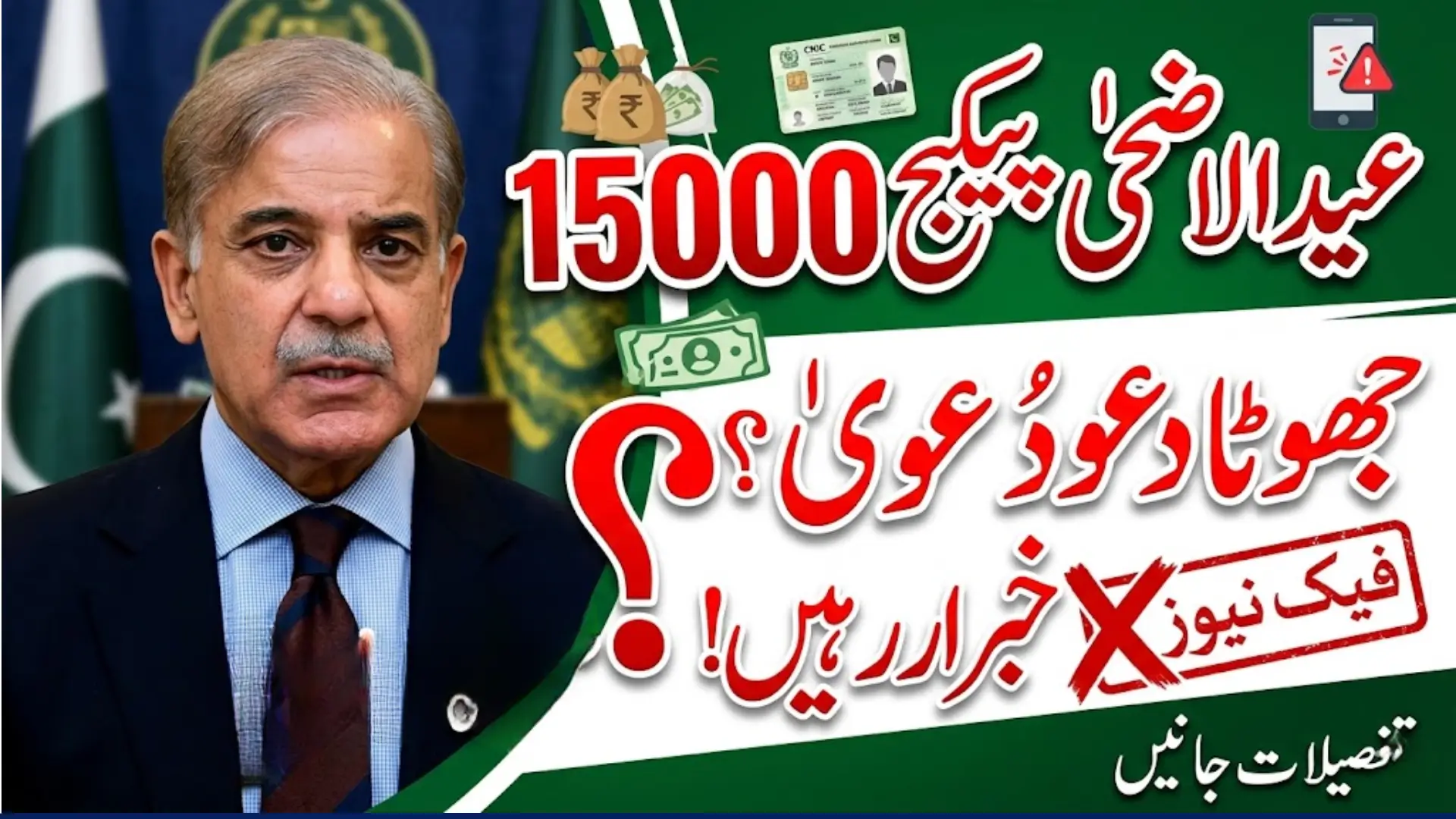
In recent days, social media has been flooded with messages about the “Shehbaz Sharif Eid ul Adha Package 15000”. Many WhatsApp groups, Facebook posts, TikTok videos, and YouTube channels are claiming that the Government of Pakistan is giving Rs. 15,000 to every family before Eid ul Adha 2026.

Because of these viral posts, thousands of people are searching online to know whether the package is real, how to check eligibility, and where to apply. However, most of these claims are creating confusion among the public because no official confirmation has been released yet.
Is the Shehbaz Sharif Eid ul Adha Package 15000 Real?
At the moment, there is no official announcement from the Government of Pakistan regarding any “Eid ul Adha Package 15000” for all families. Neither the Prime Minister’s Office nor any verified government department has confirmed this scheme publicly.
Most of the viral posts circulating online appear to be unverified or misleading. Many fake websites and social media pages are using the name of Prime Minister Shehbaz Sharif to attract clicks and collect personal information from innocent users.
You can also read: PM Shahbaz Sharif Eid Offer 15000
Why Are These Viral Posts Suspicious?
Most fake posts follow the same pattern and use emotional language to force people into clicking suspicious links quickly. These posts usually claim that registration is open for a limited time only.
Common signs of fake Eid package posts include:
- “Every family will receive Rs. 15,000”
- “Send your CNIC immediately”
- “Click the registration link now”
- “Limited-time Eid offer”
- “Government cash for everyone”
These messages are often designed to steal personal information or generate fake website traffic.
How to Check If a Government Scheme Is Real
Real government relief schemes are always announced through official platforms and trusted news sources. If a scheme is genuine, you can easily verify it from official government channels.
Signs of a Real Government Program
| Verification Method | Genuine Scheme | Fake Scheme |
|---|---|---|
| Official Government Website | Yes | Usually No |
| TV News Coverage | Yes | Rarely |
| Proper Eligibility Criteria | Yes | No Clear Rules |
| Helpline Support | Available | Missing |
| Verified Registration Portal | Available | Suspicious Links |
| CNIC Verification System | Official | Unsafe Forms |
Before trusting any viral message, always verify it through authentic government announcements.
How to Check Shehbaz Sharif Eid ul Adha Package Update 15000
If the government officially launches any Eid relief package in the future, the updates will most likely appear through trusted channels only. People should avoid random social media links and rely on official sources.
You can check updates safely through:
- Official government websites
- Trusted TV news channels
- Verified social media accounts of government departments
- Official BISP or Ehsaas portals
- Press conferences from government officials
Never trust unknown websites asking for sensitive information without verification.
You can also read: BISP 8171 Eid ul-Adha Payment 18000/-
Can Fake Eid Package Links Be Dangerous?
Yes, fake registration links can be very risky. Cyber scammers often use fake government schemes to collect users’ private data. Once your information is shared, it may be misused for fraud or scams.
Scammers may try to collect:
- CNIC number
- Mobile number
- OTP verification code
- Bank account details
- ATM card information
Users should never share these details on unverified websites or social media forms.
Common Mistakes People Make
Many people unknowingly fall for fake schemes because they quickly trust viral messages without checking official sources first. This becomes even more common during Eid seasons when financial support rumors spread rapidly.
Avoid these common mistakes:
- Clicking unknown registration links
- Sharing CNIC photos publicly
- Sending OTP codes to strangers
- Forwarding unverified messages
- Trusting random YouTube thumbnails
- Registering on unofficial websites
Being careful online can protect your personal information and finances.
Best Way to Stay Updated About Government Relief Packages
The safest approach is to follow official announcements only. Government relief programs are normally announced through proper media channels with complete eligibility details and application procedures.
For reliable updates, people should regularly check:
- Official Government of Pakistan portals
- Verified BISP announcements
- National TV news channels
- Official press releases
- Trusted newspapers
Avoid depending entirely on Facebook pages or WhatsApp forwards for important financial news.
What Should You Do If You Receive a Fake Eid Package Message?
If you receive a suspicious message about the “Eid ul Adha Package 15000,” do not panic or rush into registration. Most fake schemes are designed to create urgency so people act without thinking.
Follow these safety steps immediately:
- Do not click suspicious links
- Never share your CNIC or OTP
- Block suspicious numbers or pages
- Report fake posts on social media
- Verify information from official sources first
Staying alert is the best protection against online scams.
Latest Update About Eid ul Adha Package 15000
Currently, there is no confirmed evidence that the Government of Pakistan has approved a Rs. 15,000 Eid ul Adha package for every family. Any future announcement will likely come through official government channels first.
Until then, people should avoid spreading unverified news and stay cautious of fake registration links circulating online. False information can mislead vulnerable families and expose them to cyber fraud risks.
You can also read: BISP 2026 Installment 14500 Check
Conclusion
The viral news about the “Shehbaz Sharif Eid ul Adha Package 15000” currently appears to be fake or unverified because no official government confirmation has been released so far. Social media rumors often spread quickly during festive seasons, making it important to verify every claim carefully.
If the government launches any real Eid relief package in the future, details will be shared through official websites, trusted news channels, and verified announcements. People should stay informed, avoid fake links, and protect their personal information from online scammers.