
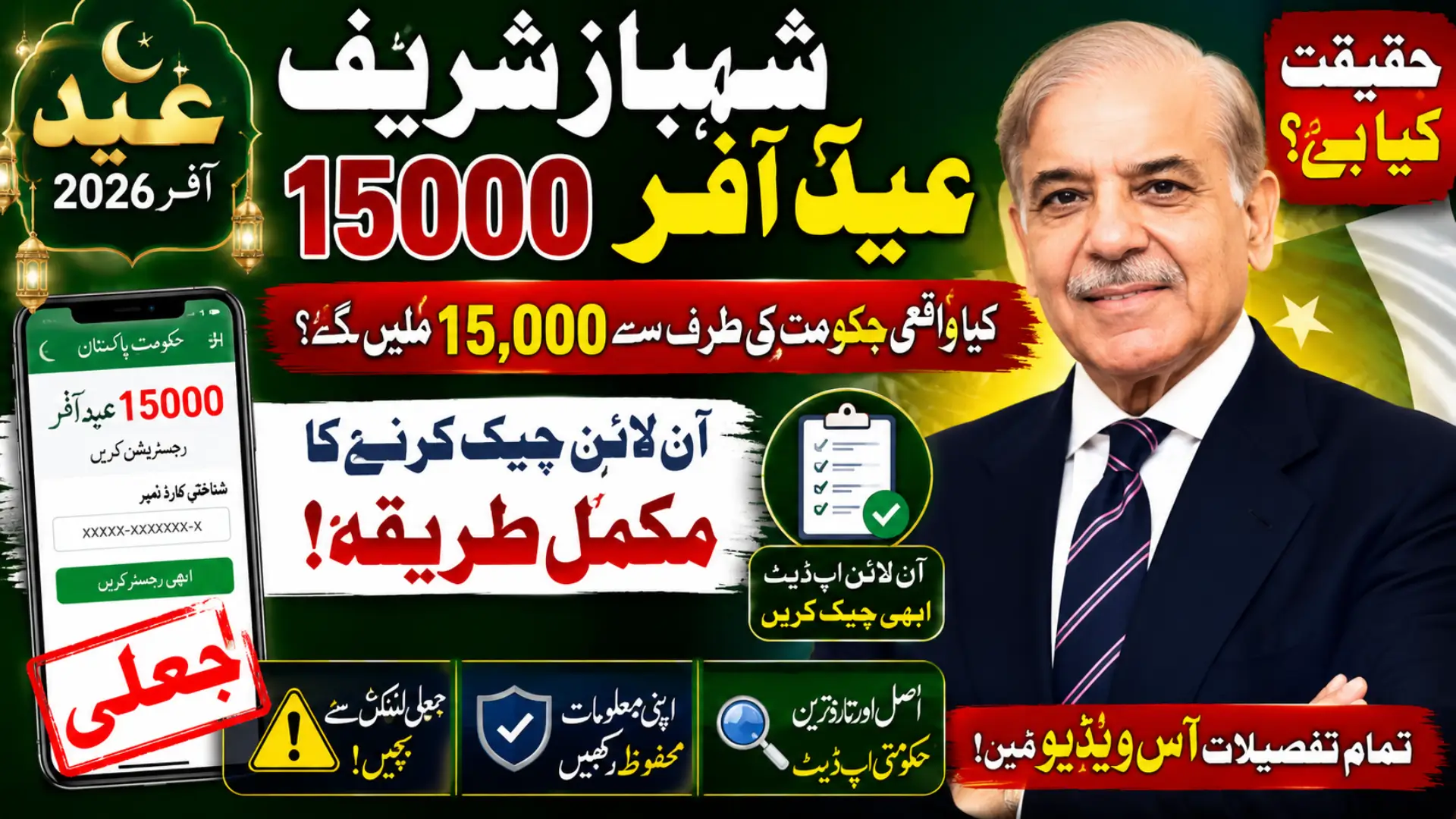
As Eid approaches, many people in Pakistan search online for government relief packages and financial assistance programs. Recently, social media platforms have been flooded with claims about the “Shahbaz Sharif Eid Offer 15000,” which supposedly provides Rs. 15,000 cash assistance to families before Eid 2026. Because inflation and household expenses continue to increase, many citizens are naturally interested in such offers.

However, before applying for any online scheme, it is extremely important to verify whether the information is genuine or fake. Many scammers create fake registration websites and viral WhatsApp messages to steal personal data from innocent users. This guide explains how to check Shahbaz Sharif Eid Offer updates online safely and step by step while protecting your personal information.
What Is the Shahbaz Sharif Eid Offer 15000?
The Shahbaz Sharif Eid Offer 15000 is a viral online claim saying that the Government of Pakistan is distributing Rs. 15,000 to families as an Eid financial support package. Social media posts claim users can apply online by entering their CNIC number and mobile details through shared links.
You can also read: BISP 8171 Eid ul-Adha Payment 18000
Most of these claims are spreading through WhatsApp groups, Facebook pages, TikTok videos, and unofficial websites. Many posts use government logos and photos of Prime Minister Shehbaz Sharif to appear trustworthy. However, users should understand that copied images and logos do not prove a scheme is officially approved.
Is the Eid Offer Real or Fake?
Currently, there is no official confirmation from the Government of Pakistan regarding any scheme called the “Shahbaz Sharif Eid Offer 15000.” No verified announcement has been issued through official government websites, television press conferences, or trusted national media channels.
This is why many cybersecurity experts believe the viral registration links may be phishing scams designed to collect personal information. Fake websites often ask users to submit sensitive details like CNIC numbers, OTP codes, or banking information, which can later be misused for fraud or identity theft.
Why People Are Searching for the Eid Offer Update
Many families are actively searching for Eid assistance programs because economic pressure in Pakistan continues to increase. Rising electricity bills, inflation, unemployment, and food expenses have made government support schemes highly important for low-income households.
Scammers understand these financial struggles and use emotional marketing tactics to spread fake offers quickly. They often create urgency by using phrases like:
- “Limited registration”
- “Apply before Eid”
- “Last chance for Rs. 15,000”
- “Government Eid gift”
- “Registration closing tonight”
These emotional tactics pressure users into acting quickly without checking whether the scheme is genuine.
How to Check Shahbaz Sharif Eid Offer Update Online Step by Step
Checking any government scheme online safely is very important. Instead of trusting social media posts immediately, follow proper verification steps before applying anywhere.
Step 1 – Visit Official Government Websites
Always check official government portals first. Genuine schemes are announced through trusted government domains and official departments.
Important sources include:
- Government of Pakistan Official Portal
- BISP Official Website
- Prime Minister’s Office Pakistan
- NADRA Official Website
If no announcement appears on these websites, the offer is likely fake or unverified.
Step 2 – Check National News Channels
Authentic government schemes are usually covered by major Pakistani news channels and newspapers. Search trusted media websites to confirm whether the package has officially launched.
Reliable news coverage normally includes:
- Eligibility criteria
- Registration dates
- Official press releases
- Government spokesperson statements
- Payment methods
If no major news channel reports the scheme, you should remain cautious.
Step 3 – Verify Social Media Accounts
Many scammers create fake Facebook pages using government logos and politician photos. Always check whether the page has an official verification badge before trusting any announcement.
Only follow verified government pages and avoid random social media posts shared in WhatsApp groups or TikTok comments.
Step 4 – Avoid Clicking Unknown Registration Links
Do not open suspicious links claiming “instant registration” or “quick approval.” Fake websites often contain spelling mistakes, excessive ads, and low-quality layouts.
Before entering any information:
- Check the website domain carefully
- Avoid shortened links
- Never trust random popups
- Do not install unknown apps
These precautions can protect your personal data from cybercriminals.
Step 5 – Protect Your CNIC and OTP Information
Government departments never ask citizens to share OTP verification codes through unofficial websites or WhatsApp messages. OTP codes are highly sensitive and can provide access to banking or mobile wallet accounts.
Never share:
- ATM PINs
- Banking passwords
- Easypaisa verification codes
- JazzCash OTPs
- Debit card information
Protecting this information is essential for online safety.
You can also read: Shehbaz Sharif 13000 Bakra Eid Package
Official Sources to Verify Government Schemes
The safest way to confirm any relief package is through official channels. Genuine schemes always provide clear instructions, customer support, and transparent eligibility rules.
Below are the most trusted sources for verification:
| Verification Source | Purpose |
|---|---|
| Official government websites | Confirm announcements |
| National TV news channels | Verify public updates |
| Verified social media pages | Check authentic notices |
| BISP portal | Relief scheme updates |
| NADRA information channels | Identity verification support |
Always cross-check information from multiple trusted sources before applying online.
Common Signs of Fake Eid Offer Websites
Fake registration websites usually show several warning signs that users often ignore. Understanding these signs can help you avoid scams and protect your identity.
Common red flags include:
- Poor grammar and spelling mistakes
- Suspicious website addresses
- “Share with 10 people” instructions
- Excessive advertisements
- Requests for OTP codes
- Urgent registration pressure
- No official contact information
If a website shows multiple warning signs, avoid submitting any information immediately.
Information You Should Never Share Online
Many users unknowingly share confidential details while trying to apply for fake government schemes. Once scammers collect this information, it may be used for fraud, identity theft, or financial scams.
Never share the following details on unknown websites:
- CNIC front and back photos
- Banking passwords
- ATM card numbers
- OTP verification codes
- Mobile wallet login details
- Biometric verification information
Genuine government programs never request sensitive financial information through random social media links.
Real vs Fake Government Scheme Indicators
The table below explains the difference between genuine and suspicious online schemes.
| Genuine Government Scheme | Fake Online Scheme |
|---|---|
| Official government portal | Unknown website links |
| Verified announcements | Viral WhatsApp forwards |
| Transparent eligibility criteria | Confusing instructions |
| Customer support available | No contact details |
| Media coverage exists | No trusted reporting |
| Secure registration system | Requests OTP codes |
This comparison helps users quickly identify risky offers online.
What to Do If You Already Submitted Your Information
If you already entered your information on a suspicious website, act quickly to reduce possible risks. Immediate action can help protect your accounts and identity from misuse.
Important steps include:
- Change important passwords immediately
- Secure banking applications
- Monitor suspicious transactions
- Contact your bank if needed
- Report fake links to authorities
- Inform family members about the scam
Fast action can reduce the chances of financial loss or identity theft.
Tips to Stay Safe From Online Scams in Pakistan
Online scams are increasing rapidly across Pakistan, especially during Eid, Ramzan, and relief package seasons. Developing basic digital awareness is now very important for every internet user.
Useful safety tips include:
- Verify information before sharing
- Follow trusted news sources only
- Avoid clicking unknown links
- Use strong passwords
- Keep OTP codes private
- Discuss suspicious offers with family members
Simple safety habits can protect users from major online fraud problems.
You can also read: Shahbaz Sharif Income Support Program 2026
Frequently Asked Questions
Can I officially apply for Shahbaz Sharif Eid Offer 15000 online?
Currently, no verified government announcement confirms the existence of this scheme. Citizens should avoid applying through unofficial links.
Is it safe to share my CNIC number online?
You should only share your CNIC on trusted and verified government portals. Avoid entering personal information on unknown websites.
How do I know if a government scheme is real?
Check official government websites, national news channels, and verified social media accounts before trusting any online scheme.
Why are fake Eid offers spreading so quickly?
Scammers use emotional messages and financial promises during Eid because many families are searching for assistance programs.
Conclusion
The viral “Shahbaz Sharif Eid Offer 15000” currently appears unverified because no official confirmation has been issued by the Government of Pakistan. Most claims are spreading through WhatsApp messages, Facebook posts, TikTok videos, and suspicious websites that may collect personal information from users.
Citizens should always verify government schemes through trusted official sources before applying online. Avoid sharing CNIC numbers, OTP codes, banking details, or other sensitive information on unknown websites. Staying alert, informed, and digitally aware is the best way to protect yourself and your family from online scams in Pakistan.