

Digital bill payments are becoming common across Pakistan, but cybercriminals are now using this convenience to target electricity consumers through fake QR codes and phishing links. Recently, the Power Division of Pakistan issued an advisory warning citizens about QR verification scams connected to electricity bills, subsidy offers, and fake payment portals.
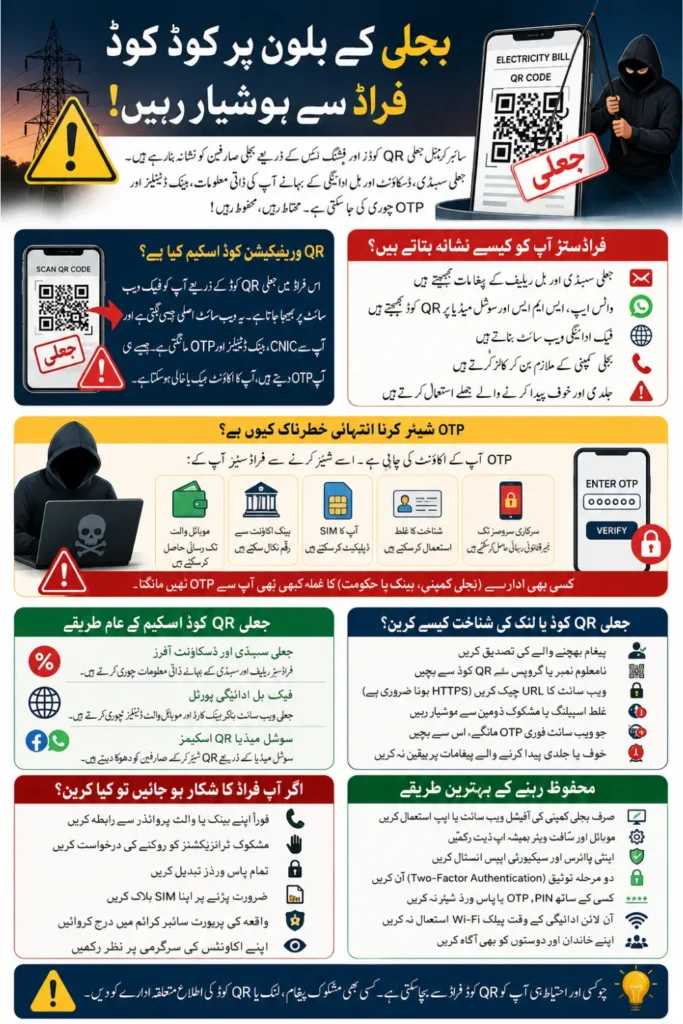
These scams usually begin with a QR code printed on a fake bill, sent through SMS, or shared on WhatsApp and Facebook. Once scanned, the code redirects users to fraudulent websites that steal sensitive information like CNIC details, banking credentials, mobile wallet access, and OTP verification codes.
What Is the QR Verification Code Scam?
The QR verification scam is a phishing technique where scammers trick users into scanning fake QR codes. These QR codes appear genuine and often imitate official electricity company payment systems or government subsidy programs.
You can also read: Motorists in KP Despite High Fuel Prices
After scanning the code, users are taken to a fake webpage designed to look like an official portal. The page asks for personal information and later requests a 6-digit OTP code. Once the OTP is shared, scammers can access financial accounts, digital wallets, or mobile SIM services.
How Fraudsters Target Electricity Bill Users
Scammers use fear, urgency, and fake discounts to manipulate users into taking quick action. Many victims believe they are verifying their bill payment or claiming a government subsidy.
Common scam methods include:
- Fake electricity subsidy messages
- QR codes sent through WhatsApp groups
- SMS claiming “bill relief” or “discount approval”
- Cloned electricity bill payment websites
- Fraud calls pretending to be electricity department staff
Most fake messages also include urgent phrases like:
- “Immediate verification required”
- “Your bill will be disconnected”
- “Claim your subsidy now”
These tactics pressure users into sharing private information without thinking carefully.
Why OTP Sharing Is Extremely Dangerous
An OTP (One-Time Password) is one of the most important layers of digital security. It is used to verify account access and financial transactions.
Scammers ask for OTPs because they can use them to:
| OTP Usage | Possible Risk |
|---|---|
| Bank transaction verification | Money theft |
| Mobile wallet login | Unauthorized access |
| SIM verification | SIM hijacking |
| Government service access | Identity misuse |
No electricity company, bank, or government department will ever ask for your OTP through SMS links, phone calls, or QR code verification pages.
Common Types of QR Code Electricity Bill Scams
1. Fake Subsidy and Relief Programs
Scammers send messages claiming users qualify for electricity subsidies or bill discounts. These fake offers mainly target low-income households looking for financial relief.
Users are redirected to fake websites where they unknowingly provide personal information and verification codes.
2. Fake Bill Payment Portals
Cybercriminals create websites that closely resemble official electricity provider portals. These sites collect card details, CNIC numbers, and mobile wallet information.
Some fake portals even show a temporary “payment successful” message to avoid immediate suspicion.
3. Social Media QR Code Scams
Fraudulent QR codes are widely shared on Facebook pages, WhatsApp groups, and Telegram channels. Many scammers pretend to offer quick bill payment services or discounted rates.
Users who scan these codes may unknowingly install malware or expose personal data.
Official Advisory Issued by Pakistan’s Power Division
The Power Division has warned consumers to avoid scanning unverified QR codes or opening suspicious links related to electricity bills. The advisory highlights the growing use of phishing attacks targeting digital payment users.
You can also read: CSS.Pitc.Com.Pk QR Code Verification Details
Authorities strongly recommend using only official apps and websites of electricity providers. Consumers are also advised to report suspicious messages and avoid sharing OTP codes under any circumstances. QR Verification Vode on Bill Poses a Risk to App
How to Identify Fake QR Codes and Scam Links
Some scam websites look almost identical to official portals, but small warning signs can help identify fraud.
Before scanning any QR code, check these points:
- Verify the sender of the message
- Avoid QR codes shared by unknown contacts
- Check whether the website uses HTTPS
- Look for spelling mistakes in website addresses
- Avoid websites demanding OTP immediately
- Never trust messages creating panic or urgency
If unsure, manually open the official electricity provider website instead of using direct links.
Warning Signs That a QR Code May Be Fake
Users should stay alert whenever they see unexpected verification requests or discount offers.
Major warning signs include:
| Suspicious Activity | Possible Scam Indicator |
|---|---|
| Unexpected QR code message | Phishing attempt |
| Request for OTP | Account takeover risk |
| Poor website design | Fake portal |
| Misspelled domain name | Fraud website |
| Urgent action demand | Social engineering tactic |
Recognizing these signs early can prevent serious financial loss.
Why QR Code Scams Are Growing Rapidly
Pakistan’s increasing shift toward online payments has created new opportunities for cybercriminals. Many users are still unfamiliar with phishing methods and digital security practices.
Several factors are contributing to the rise of QR scams:
- Growing use of mobile banking apps
- Increased online electricity bill payments
- Low awareness about cyber hygiene
- Easy generation of fake QR codes
- Financial stress exploited by scammers
Fraudsters constantly adapt their methods to appear more convincing and trustworthy.
Best Cybersecurity Practices for Electricity Consumers
Consumers can reduce risks significantly by following basic cybersecurity precautions.
Important safety practices include:
- Use only official electricity company apps
- Keep mobile software updated
- Install reliable antivirus applications
- Enable two-factor authentication
- Never share OTP or PIN codes
- Avoid public Wi-Fi during financial transactions
- Educate family members about phishing scams
Simple awareness can prevent major financial and identity-related damage.
What Happens If You Fall Victim?
Victims of QR verification scams may face serious consequences including financial theft and identity misuse. In many cases, scammers quickly transfer funds or gain access to linked services before the victim realizes the fraud.
Possible impacts include:
- Bank account theft
- Mobile wallet hacking
- SIM card duplication
- Unauthorized transactions
- Identity fraud
- Loss of subsidies or account access
Quick action is critical to limit damage after exposure.
You can also read: BISP 8171 Eligibility Families Are Eligible
Immediate Steps to Take After Sharing OTP or Personal Data
If you accidentally scan a fake QR code or share sensitive details, act immediately.
Follow these emergency steps:
- Contact your bank or wallet provider immediately
- Freeze suspicious transactions if possible
- Change passwords for all linked accounts
- Block your SIM card if needed
- Report the incident to cybercrime authorities
- Monitor account activity carefully
Fast reporting can help reduce financial losses and prevent further misuse. QR Verification Vode on Bill Poses a Risk to App
Common Mistakes People Make During QR Verification
Many users unknowingly help scammers by ignoring basic security practices.
Avoid these common mistakes:
- Scanning every QR code without verification
- Trusting social media payment offers
- Sharing OTP with unknown callers
- Clicking random bill payment links
- Ignoring website security warnings
Cybercriminals mainly succeed because users react emotionally or too quickly.
FAQs
Q1: Are QR codes on electricity bills always safe?
No. Only QR codes issued directly by verified electricity providers should be trusted.
Q2: Can scammers steal money through OTP verification?
Yes. OTP sharing can allow criminals to access bank accounts, wallets, and other sensitive services.
Q3: How can I verify an official electricity website?
Always manually search for the official provider website instead of using links from SMS or social media.
Q4: What should I do after scanning a suspicious QR code?
Immediately close the page, avoid entering any information, and scan your device using a security app.
Final Words
QR verification scams linked to electricity bills are becoming a serious cybersecurity threat in Pakistan. Cybercriminals are using fake QR codes, cloned websites, and fraudulent subsidy offers to steal personal and financial information from innocent consumers.
You can also read: 13000 Eid Ul Adha Shahbaz Sharif Program
The safest approach is to stay alert, avoid unknown QR codes, and never share OTP verification codes with anyone. By following official guidelines and practicing basic cyber hygiene, users can protect themselves from financial fraud, identity theft, and digital scams. QR Verification Vode on Bill Poses a Risk to App