
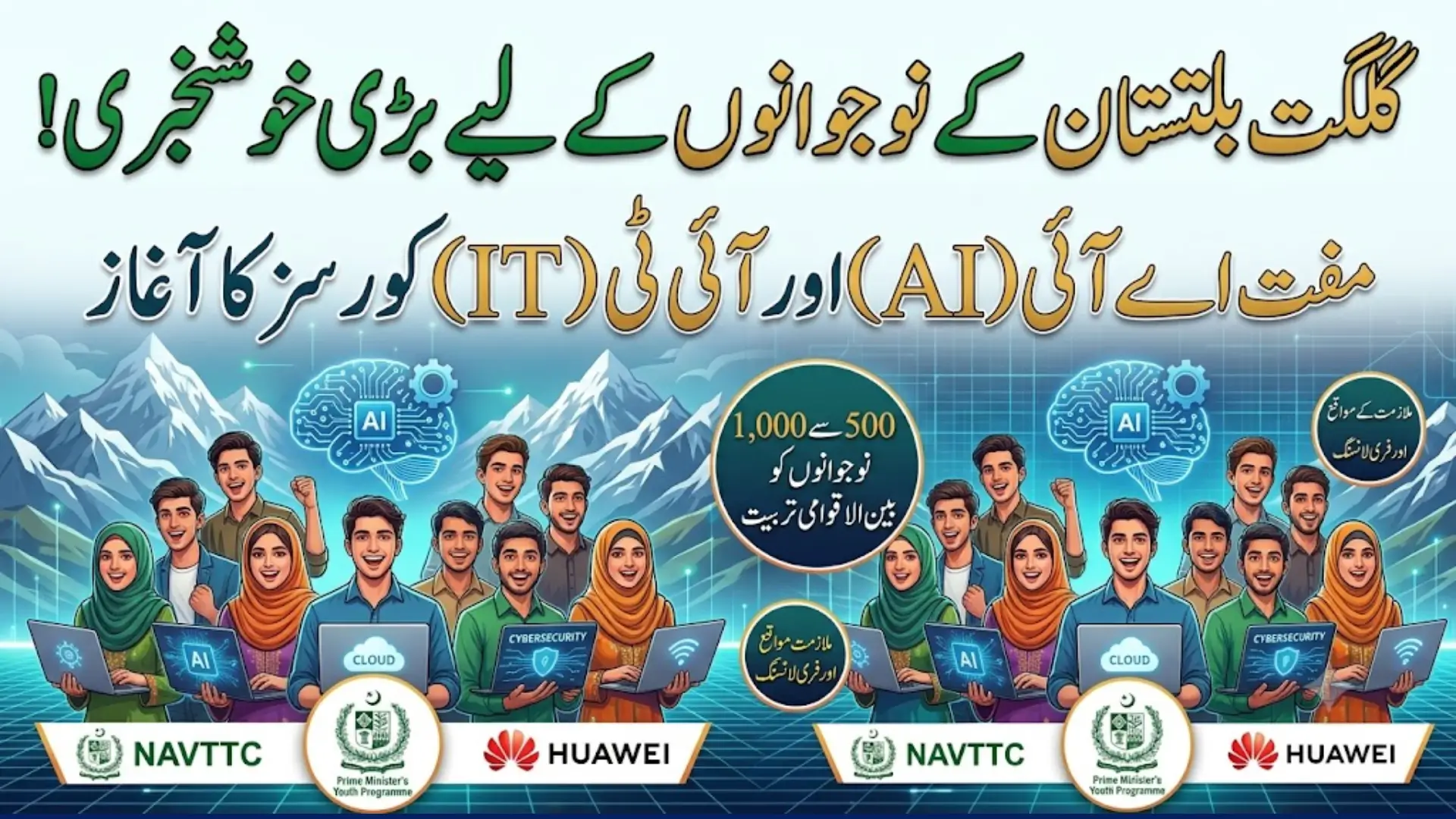
The Government of Pakistan has announced a major step to improve digital education and technical skills in Gilgit-Baltistan. Under the Prime Minister’s Youth Programme (PMYP), around 500 to 1,000 young people from the region will receive professional training in modern technologies such as artificial intelligence (AI), cybersecurity, cloud computing, and information technology (IT).
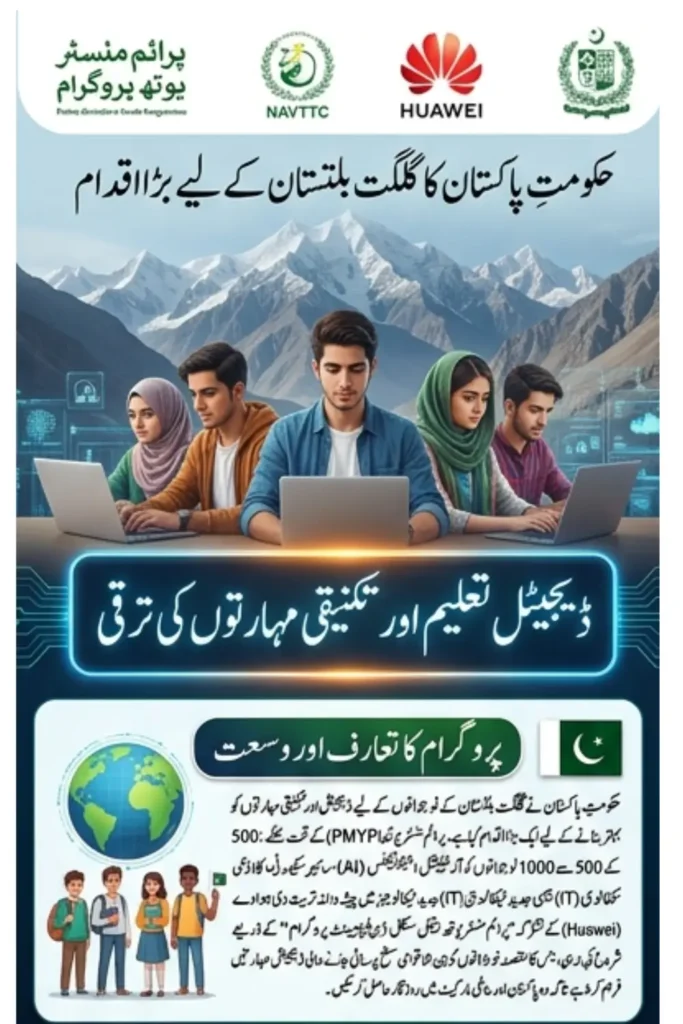
This initiative is being launched through the NAVTTC–Huawei Prime Minister’s Youth Skill Development Programme (PMYSDP). The main goal is to help the youth of Gilgit-Baltistan gain internationally recognized digital skills and improve their chances of employment in Pakistan and global online markets.
Government Expands PM Youth Programme to Gilgit-Baltistan
The decision was discussed during an important meeting in Islamabad between government officials, including Rana Mashhood Ahmed Khan and Ghulam Abbas. During the meeting, proposals were presented to formally extend the PM Youth Skill Development Programme to Gilgit-Baltistan on a priority basis.
Officials acknowledged that the youth in Gilgit-Baltistan have strong talent and interest in technology fields but face serious challenges due to limited access to advanced educational institutions and technical training centers. The expansion of this programme aims to reduce that gap and create equal learning opportunities for students in remote areas.
What Is the NAVTTC–Huawei PM Youth Skill Development Programme?
The NAVTTC–Huawei PMYSDP is a collaboration between the National Vocational and Technical Training Commission (NAVTTC) and Huawei. The programme focuses on providing internationally certified digital skills training to Pakistani youth.
The training is designed according to global technology standards and includes practical learning, industry-focused certifications, and hands-on technical experience. Students who complete these courses may improve their chances of getting jobs in software companies, IT firms, startups, freelancing platforms, and remote international markets.
You can also read: Punjab Hukumat Ramzan Package
AI and IT Courses Planned for GB Youth
The programme will focus on modern and high-demand technologies that are rapidly growing worldwide. These courses are expected to help students build strong digital careers and prepare them for future job markets.
Some major training areas include:
- Artificial Intelligence (AI)
- Cloud Computing
- Cybersecurity
- Data Networking
- Information Technology (IT)
- Digital Skills Development
- Huawei Certified Technical Courses
- Emerging Technologies
These fields are currently among the fastest-growing sectors globally, and skilled professionals are in high demand across industries.
Key Benefits for Young People in Gilgit-Baltista
This initiative can create major educational and financial opportunities for youth living in remote areas of Gilgit-Baltistan. Many students who previously lacked access to advanced IT training may now receive professional certifications and digital exposure.
Main benefits of the programme include:
- Access to internationally recognized training
- Better employment opportunities
- Increased freelancing potential
- Exposure to modern technologies
- Improved digital literacy
- Opportunities for remote work
- Career development in global IT markets
For many students, this could become a pathway toward financial independence and long-term career growth.
Training Targets and Future Expansion Plans
According to officials, the government plans to enroll between 500 and 1,000 youth from Gilgit-Baltistan within the next 12 months. However, the long-term vision is much larger.
A dedicated Gilgit-Baltistan High-Tech Digital Skills Programme is also under discussion. Under this future plan, more than 2,500 young people could receive advanced digital and IT training over the next three years. This shows the government’s growing focus on technology education and digital empowerment in underserved regions.
Important Technologies Included in the Programme
Modern IT industries require specialized skills rather than basic computer knowledge. That is why the programme is focusing on advanced technologies that are shaping the future global economy.
Artificial Intelligence (AI)
AI training may include machine learning basics, automation tools, smart systems, and AI applications used in businesses and industries. AI skills are becoming highly valuable in software development, healthcare, finance, and online services.
Cybersecurity
Cybersecurity courses can help students learn how to protect systems, networks, and digital information from cyber threats. As online security risks continue to increase, cybersecurity professionals are becoming essential worldwide.
Cloud Computing
Cloud computing training teaches how online servers, storage systems, and cloud-based applications work. Many global companies now rely on cloud technologies for business operations and remote services.
Expected Impact on Employment and Freelancing
Pakistan’s IT and freelancing sectors are growing rapidly, and skilled digital workers are now earning through remote jobs, software development, content creation, and online services. This programme may help Gilgit-Baltistan youth enter these growing markets.
Students with AI and IT certifications can potentially work in:
- Software houses
- International tech companies
- Freelancing platforms
- Remote IT support services
- Cybersecurity firms
- Cloud service companies
- Digital startups
The initiative may also reduce unemployment by helping youth build practical, market-ready skills instead of relying only on traditional degrees. AI and IT Courses
You can also read: CM Rehmat Card Apply Online Check
Challenges the Programme Aims to Solve
Gilgit-Baltistan faces unique educational and infrastructural challenges because of its mountainous geography and remote communities. Many talented students struggle to access modern training institutes and professional mentorship.
This programme aims to solve issues such as:
| Challenge | Expected Solution |
|---|---|
| Limited IT institutes | Online and certified training programmes |
| Geographical barriers | Digital learning opportunities |
| Lack of advanced skills | AI and technology-focused education |
| Unemployment among youth | Job-oriented technical training |
| Low access to global markets | International certifications and digital exposure |
By addressing these problems, the government hopes to strengthen digital inclusion in the region.
How Students Can Prepare for These Opportunities
Students interested in joining these programmes should begin improving their basic digital knowledge and communication skills early. Having a strong learning mindset can make technical training easier and more effective.
Useful preparation tips include:
- Learn basic computer operations
- Improve English communication skills
- Practice internet research
- Develop problem-solving abilities
- Stay updated with technology trends
- Create professional online profiles
- Learn basic coding concepts
Students should also regularly check official announcements from NAVTTC and the Prime Minister’s Youth Programme for registration updates and eligibility details.
Common Mistakes Youth Should Avoid During IT Training
Many students join technology courses but fail to fully benefit because they focus only on certificates instead of practical skills. In the IT industry, hands-on experience matters more than theoretical learning alone.
Avoid these common mistakes:
- Ignoring practical assignments
- Depending only on video lectures
- Skipping daily practice
- Learning too many skills at once
- Avoiding teamwork and communication
- Not building a portfolio or projects
Students who consistently practice and build real projects usually perform better in jobs and freelancing careers. AI and IT Courses
Why This Initiative Matters for Pakistan’s Digital Future
Pakistan is increasingly focusing on digital transformation, technology exports, and youth empowerment. Expanding AI and IT training to Gilgit-Baltistan shows that the government wants young people from all regions to participate in the country’s digital economy.
This initiative can help create a more skilled workforce, increase IT exports, improve employment opportunities, and support Pakistan’s long-term digital growth strategy. It also highlights the importance of equal access to modern education, regardless of geographical location.
You can also read: Breaking News Over 1.1 Million Register
Final Thoughts
The decision to provide AI and IT courses to youth in Gilgit-Baltistan is an important development for Pakistan’s technology and education sectors. By introducing internationally recognized digital training through the NAVTTC–Huawei partnership, the government is opening new career pathways for students in remote areas.
If implemented effectively, this programme can help hundreds of young people build successful careers in AI, cybersecurity, cloud computing, and other high-demand fields. It may also contribute to reducing unemployment, promoting freelancing, and strengthening Pakistan’s digital future in the coming years. AI and IT Courses