
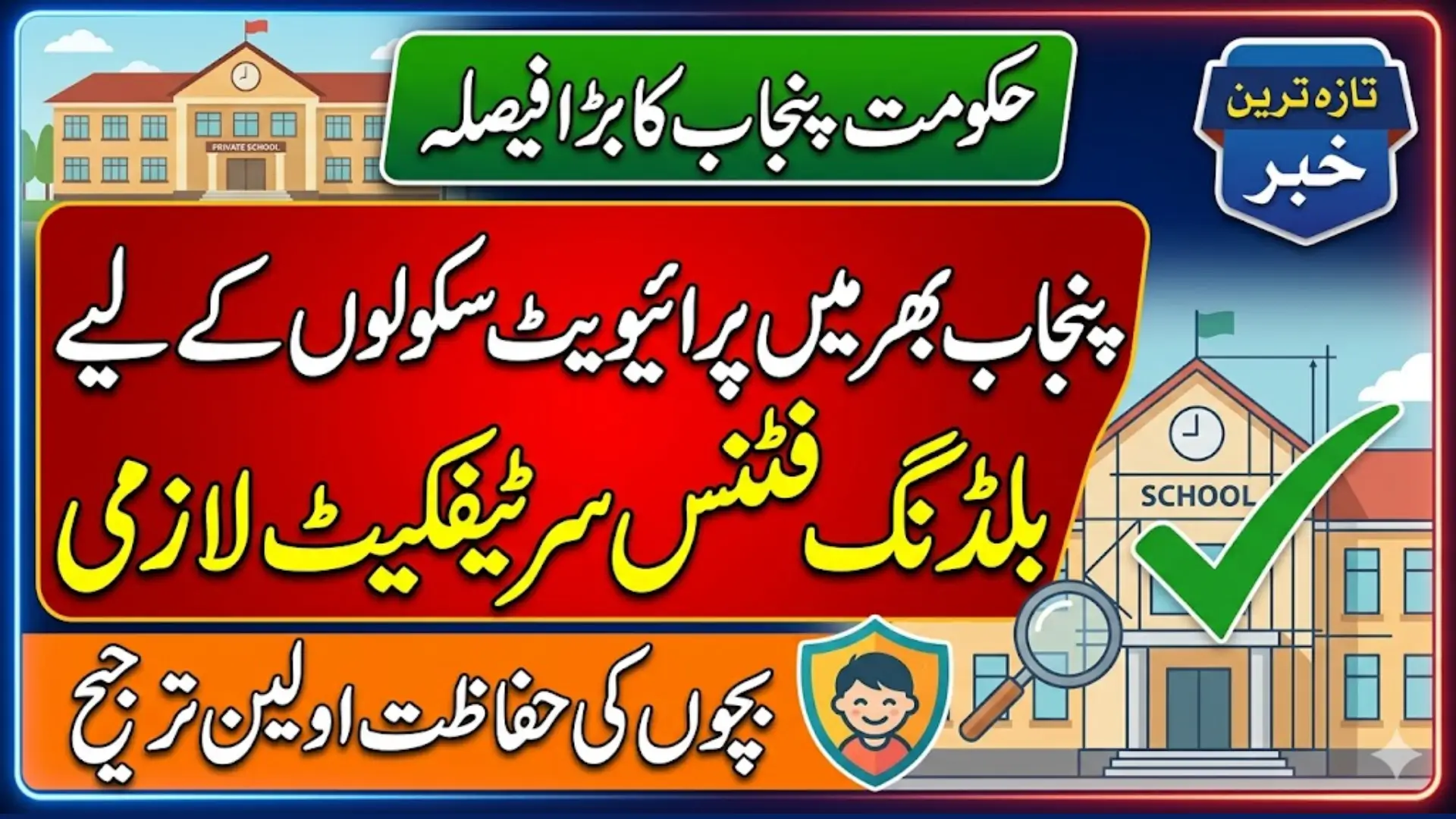
The Punjab government has introduced a major proposal aimed at improving the safety of children studying in private schools across the province. Under the new plan, private schools may soon be required to obtain mandatory building fitness certificates before registration or renewal approval. The move comes after growing concerns about unsafe school buildings, especially those operating in residential properties without proper structural approval.
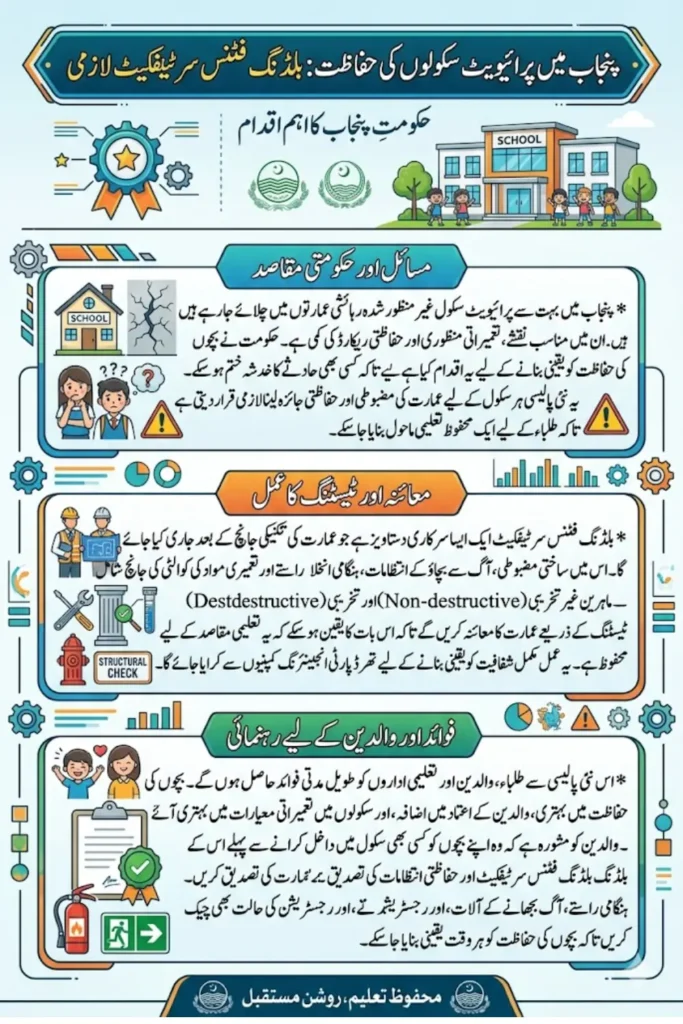
According to the Punjab Communication and Works Department, the proposed policy focuses on checking the strength, safety, and stability of school buildings through professional structural inspections. Authorities believe this step will help prevent accidents and create a safer learning environment for thousands of students studying in private institutions.
Why Punjab Government Introduced This New School Safety Plan
The government introduced this proposal after identifying serious safety concerns in many private schools across Punjab. Officials found that several schools are operating inside converted residential buildings that were never designed for educational purposes. In many cases, building maps, approvals, and structural records are either incomplete or completely missing.
You can also read: BISP 8171 Eid ul-Adha Payment 18000/-
Authorities are especially concerned about student safety because private schools accommodate a large number of children every day. In Lahore alone, nearly 3,500 private schools are registered under the current system. Without proper inspections, unsafe buildings can put students, teachers, and staff at serious risk during emergencies such as earthquakes, fires, or structural failures.
What Is a Building Fitness Certificate?
A building fitness certificate is an official document issued after technical experts inspect a building and confirm that it is safe for use. Under the proposed policy, this certificate will become compulsory for private schools operating in Punjab.
The inspection process may include:
- Structural strength assessment
- Safety and stability testing
- Verification of approved building maps
- Review of construction quality
- Emergency safety evaluation
- Fire and evacuation safety checks
- Non-destructive and destructive testing methods
These inspections are expected to be carried out by third-party consultants or independent engineering firms to ensure transparency and professional evaluation.
Proposed School Building Inspection Process
The Punjab Communication and Works Department has recommended a detailed inspection system to improve school safety standards. This process will help authorities identify dangerous buildings before they pose risks to children.
| Inspection Area | Purpose |
|---|---|
| Structural Inspection | Checks overall building strength |
| Safety Assessment | Identifies risks and safety hazards |
| Map Verification | Confirms approved construction plans |
| Material Testing | Evaluates construction quality |
| Emergency Safety Review | Examines evacuation preparedness |
| Institutional Approval Check | Verifies legal use for educational purposes |
Officials believe this structured process can help establish a more secure educational environment throughout Punjab.
How the New Policy Will Affect Private Schools
If approved, the new policy will directly impact both existing and newly established private schools. Schools seeking registration or renewal will likely need to submit valid building fitness certificates before receiving approval from authorities.
Private school owners may also face additional responsibilities, including:
- Hiring certified engineers for inspections
- Updating old or unsafe structures
- Maintaining proper building records
- Obtaining institutional use approvals
- Following safety regulations strictly
Although this may increase operational costs for some schools, the government considers student safety a higher priority than administrative convenience.
Why Many School Buildings Are Under Scrutiny
The official letter issued by the Punjab Communication and Works Department highlighted several major problems currently found in private school buildings. Many schools are functioning in properties originally built for residential use rather than educational activities.
Authorities also observed that some buildings lack:
- Approved architectural maps
- Structural engineering records
- Legal institutional permissions
- Proper emergency exits
- Fire safety arrangements
Because children spend long hours inside these buildings daily, officials believe strict safety inspections are now necessary to prevent future incidents.
You can also read: 8171 Web Portal 2026 Check Eligibility
Role of Third-Party Engineering Consultants
One important part of the proposal is the involvement of independent engineering firms and third-party consultants. Instead of relying only on internal departments, the government wants professional experts to conduct technical inspections fairly and accurately.
These consultants may perform advanced testing methods to evaluate whether buildings can safely accommodate students. Independent inspections also reduce the chances of negligence, corruption, or inaccurate reporting during the certification process.
Difference Between Destructive and Non-Destructive Testing
The proposal also mentions destructive and non-destructive testing methods, which are commonly used in structural engineering to assess building safety.
Non-Destructive Testing (NDT)
This method checks the building’s condition without damaging the structure. Engineers use specialized tools to identify cracks, weak concrete, or hidden structural issues safely.
Destructive Testing
In this process, small samples of construction material may be removed and tested in laboratories to measure actual strength and durability. Although limited damage occurs, it provides highly accurate results about structural quality.
Both methods help experts determine whether a school building is safe enough for students and staff.
Benefits of the New School Safety Policy
The proposed policy can provide several long-term benefits for students, parents, and educational institutions across Punjab.
- Improved safety for children
- Reduced risk of building accidents
- Better emergency preparedness
- Stronger government monitoring
- Increased parent confidence
- Higher construction standards for schools
- Legal compliance for private institutions
If implemented properly, the policy could significantly improve the overall quality and safety of private education infrastructure in Punjab.
Challenges Schools May Face After Implementation
While the proposal focuses on safety, some private schools may struggle to meet the new requirements immediately. Older buildings especially may require repairs, redesigning, or complete structural upgrades.
Common challenges may include:
- High inspection costs
- Delays in certification approval
- Renovation expenses
- Difficulty obtaining missing records
- Compliance issues for small schools
Despite these concerns, education experts believe that ensuring child safety should remain the top priority for every educational institution.
Important Advice for Parents
Parents should stay informed about whether their child’s school follows proper safety standards. Once the policy becomes active, parents may ask schools about their building fitness certification and inspection status.
Before selecting a school, parents should check:
- Building condition and cleanliness
- Emergency exits and safety arrangements
- Legal registration status
- Availability of fire safety equipment
- Structural stability of the premises
Choosing a safe educational environment is just as important as academic quality.
Government’s Next Possible Steps
The School Education Department has reportedly been asked to make an immediate policy decision regarding the proposal. If approved, authorities may begin conducting province-wide surveys and inspections of private school buildings in the coming months.
You can also read: Shehbaz Sharif Eid ul Adha Package Update 15000
The government could also introduce stricter registration rules, digital safety records, and regular monitoring systems to ensure schools continue meeting structural safety standards over time.
Conclusion
The Punjab government’s proposed plan to make building fitness certificates mandatory for private schools is an important step toward protecting children and improving educational safety standards. By introducing professional structural inspections and stricter building checks, authorities aim to reduce risks associated with unsafe school buildings operating across the province.
Although some schools may face financial and administrative challenges during implementation, the overall objective is to ensure that every child studies in a safe, secure, and properly approved educational environment. If successfully enforced, this policy could become a major improvement in Punjab’s private education system and strengthen public trust in school safety standards.