
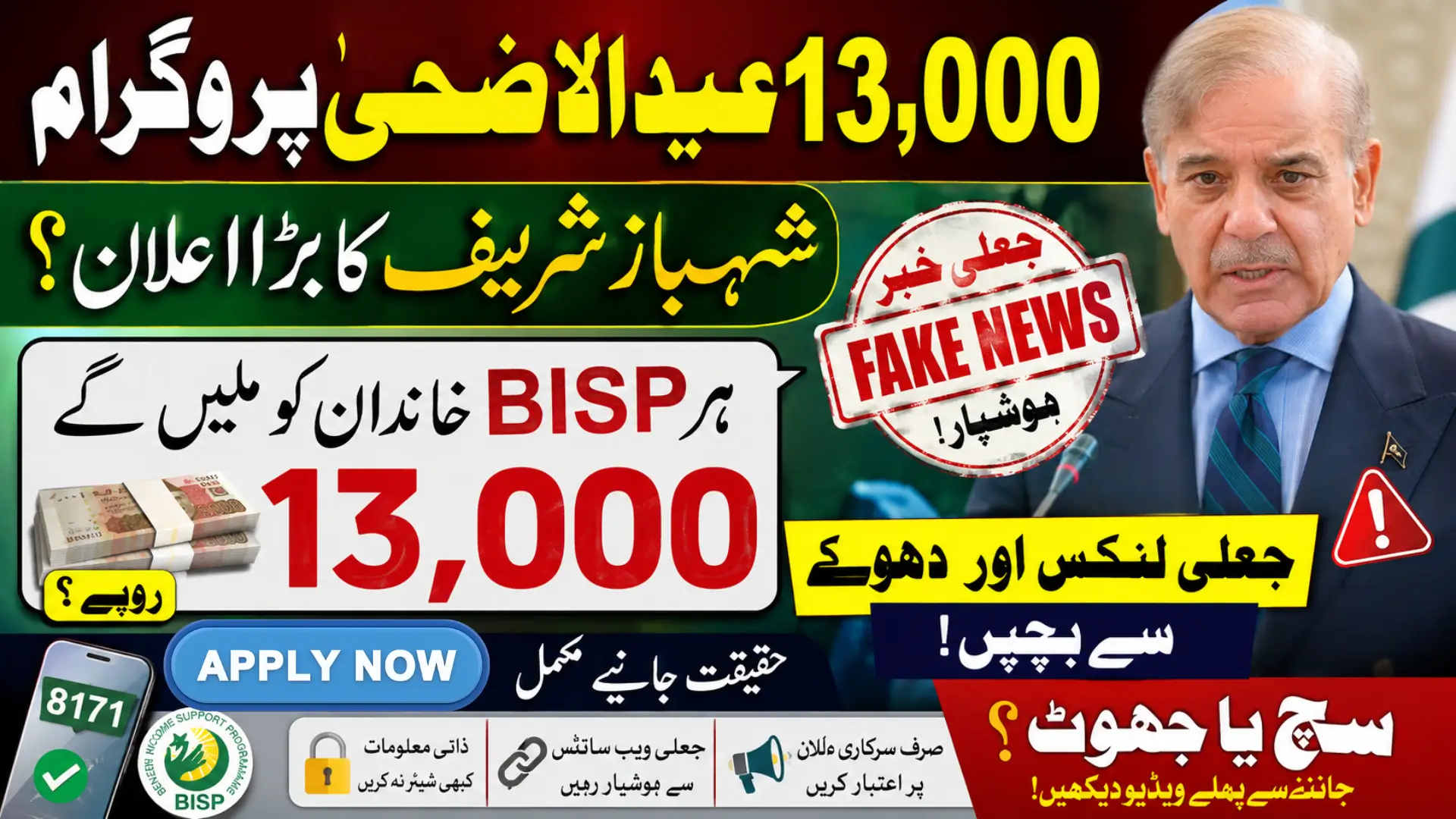
The “13000 Eid Ul Adha Shahbaz Sharif Program For BISP Register Families” has recently become one of the most searched topics on social media in Pakistan. Thousands of Facebook posts, WhatsApp messages, TikTok videos, and random websites are claiming that the government is giving Rs. 13,000 cash assistance to every registered BISP family before Eid-ul-Adha 2026.

Because of rising inflation and financial pressure, many families are quickly trusting these viral claims. However, the reality is very different. No official notification has been issued yet by the Government of Pakistan, the Prime Minister’s Office, or the Benazir Income Support Programme regarding any “13000 Eid Package” for all BISP beneficiaries.
Is the 13000 Eid Ul Adha Program Real or Fake?
At this time, the viral “13000 Eid Ul Adha Shahbaz Sharif Program” is unverified and mostly considered fake or misleading. Several unofficial websites are spreading false registration forms and asking people to submit personal information such as CNIC numbers, mobile numbers, OTP codes, and banking details.
You can also read: Shahbaz Sharif Eid Offer Update Check Online Step by Step
According to multiple fact-check reports, no official Eid-ul-Adha 13000 cash scheme has been announced for all BISP families. Most viral posts are designed only to attract traffic, collect user data, or mislead low-income families searching for financial support before Eid.
Reality Check Table
| Viral Claim | Reality |
|---|---|
| Every BISP family will receive Rs. 13,000 before Eid | No official confirmation |
| Online registration has started | Fake registration links are circulating |
| Apply through WhatsApp or Facebook links | Unsafe and unofficial |
| 8171 Eid package announced | No verified BISP announcement yet |
| Government notification issued | No official notification available |
Why Fake 13000 Eid Package News Is Spreading Fast
Many fake pages use emotional headlines and urgent language to attract users. Since millions of families already receive assistance through BISP and 8171 programs, scammers know people may trust messages connected to government aid schemes.
These fake campaigns usually appear before Eid, Ramzan, or during inflation crises because people are actively searching for relief packages and emergency support programs online.
Common Tactics Used by Fake Websites
Fake websites and social media pages often use these misleading lines:
- “Every family will get 13000”
- “Apply now before registration closes”
- “Submit your CNIC immediately”
- “8171 Eid Package Online Registration”
- “Share this link with 10 people to qualify”
- “Limited-time Shahbaz Sharif relief offer”
Their main goal is usually:
- Stealing personal information
- Collecting CNIC data
- Getting OTP verification codes
- Generating fake website traffic
- Running advertising scams
People should stay alert and avoid trusting random social media links without official verification.
How People Are Being Scammed Through Fake Eid Schemes
Many users unknowingly enter sensitive information on fake registration websites. Once scammers collect this data, they may misuse it for fraud, SIM registration abuse, fake account creation, or financial scams.
Some fake websites even copy the design of government portals to look authentic. This makes it difficult for ordinary users to identify whether a website is official or fake.
Information You Should Never Share
Never share the following information on random websites or social media forms:
- CNIC number on unverified links
- ATM PIN or bank account details
- Mobile banking passwords
- One-Time Passwords (OTP)
- SIM verification codes
- Personal family records
Government departments never ask for OTP codes or banking passwords through WhatsApp or Facebook messages.
Official Sources to Verify BISP or Government Schemes
Whenever the government launches a genuine relief package, it is officially announced through verified platforms. People should only trust official government communication channels instead of viral social media posts.
If there is any real Eid assistance package in the future, it will first appear through official announcements and trusted national media sources.
You can also read: BISP 8171 Eligibility Families Are Eligible
Trusted Sources for Verification
You should verify updates from:
- Official Benazir Income Support Programme announcements
- Government press conferences
- National TV news channels
- Verified government websites
- Official 8171 communication channels
Avoid relying on:
- Random YouTube channels
- Unknown TikTok videos
- WhatsApp forwards
- Facebook pages without verification
- Clickbait blogs
How to Check Genuine BISP Updates Safely
Many beneficiaries become confused because fake pages use the names “8171” and “BISP” to gain trust. The safest approach is to verify information only through official channels before applying anywhere.
If a new payment or relief package is approved, beneficiaries are usually informed through official SMS services or recognized government announcements.
Safe Steps for BISP Beneficiaries
Follow these simple safety steps:
- Open only official BISP websites
- Ignore suspicious registration forms
- Never pay fees for registration
- Do not trust “guaranteed approval” claims
- Verify every update through trusted news sources
- Avoid sharing OTP codes with anyone
These precautions can help families protect themselves from online fraud and fake aid schemes.
Difference Between Official BISP Programs and Fake Viral Schemes
Many people confuse regular BISP payments with newly viral social media schemes. Understanding the difference can help beneficiaries avoid scams and misinformation.
Official government programs follow a proper process, while fake schemes mostly depend on urgency, emotional pressure, and unofficial links.
| Official Government Program | Fake Viral Scheme |
|---|---|
| Announced through official channels | Shared mostly on social media |
| Has verified notification | No official proof |
| Uses secure portals | Uses suspicious websites |
| Transparent eligibility criteria | Unrealistic promises |
| No OTP sharing required | Requests personal information |
Important Warning for the Public
People should understand that not every viral post is true. Social media platforms are full of fake financial schemes designed to target low-income families searching for assistance before Eid-ul-Adha.
Forwarding unverified messages can also spread panic and misinformation. Before sharing any post, always confirm whether it comes from an official source or not.
Common Mistakes People Should Avoid
Many users unknowingly make these mistakes:
- Clicking unknown registration links
- Trusting every YouTube update
- Sharing personal documents online
- Believing edited screenshots
- Forwarding unverified claims to relatives
A little caution can protect families from fraud and identity theft.
Will the Government Announce Any Eid Relief Package?
The government may announce relief programs in the future depending on economic conditions and public welfare policies. However, until an official notification is issued, no viral claim should be treated as confirmed news.
You can also read: Free Digital Skills Training Program for Youth
Citizens should wait for verified announcements instead of relying on rumors. Authentic government schemes are always properly documented and publicly announced through official platforms.
Conclusion
The viral news regarding the “13000 Eid Ul Adha Shahbaz Sharif Program For BISP Register Families” is currently fake, misleading, or unverified. No official confirmation has been issued by the Government of Pakistan or the Benazir Income Support Programme about giving Rs. 13,000 to every BISP family before Eid-ul-Adha 2026.
The public should stay careful, avoid fake registration links, and never share sensitive personal information online. Always trust official government announcements instead of social media rumors. Spreading awareness about fake schemes is important to protect vulnerable families from scams and misinformation.