

Fuel prices in Pakistan have taken a sharp turn in April 2026, creating serious concern for households, transporters, and businesses. The latest increase has pushed petrol and diesel prices to historically high levels, directly affecting daily expenses and economic activity.
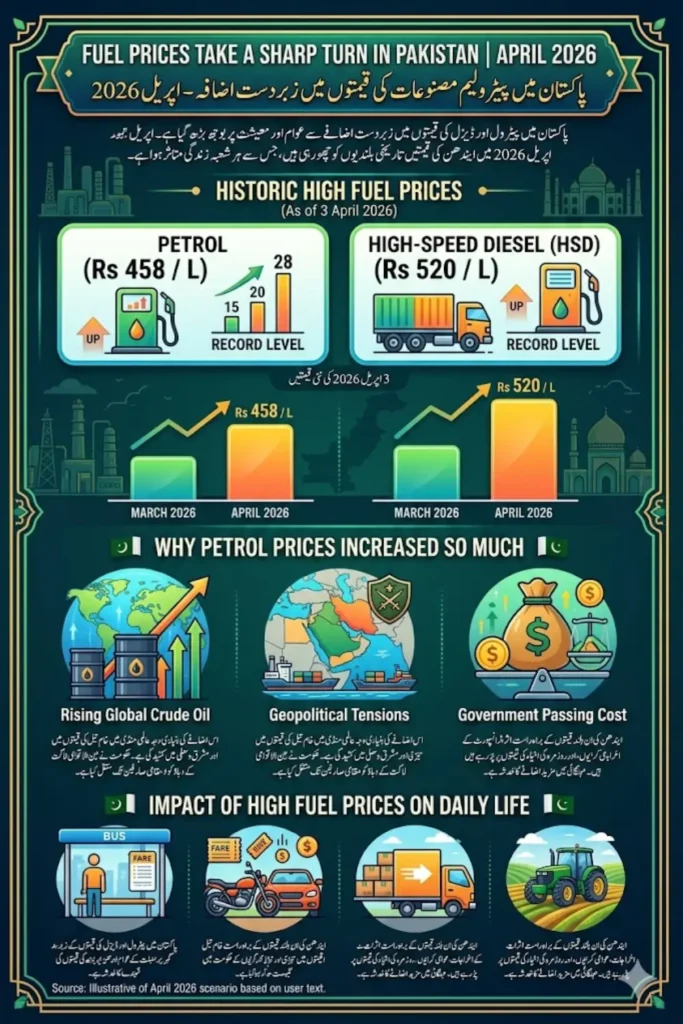
As of 3 April 2026, the most widely reported retail price of petrol is around Rs458 per litre, while high-speed diesel (HSD) has reached approximately Rs520 per litre. This article explains the latest prices, reasons behind the increase, and what it means for people across Pakistan.
Current Petrol Price in Pakistan (3 April 2026)
The latest fuel price update reflects a major increase compared to previous weeks. This is not a routine adjustment but a significant jump driven by global oil market conditions.
Latest Fuel Prices
| Fuel Type | Price (PKR per litre) | Previous Level (March 2026) |
|---|---|---|
| Petrol | Rs458 | Rs321.17 |
| High-Speed Diesel | Rs520 | Rs335.86 |
The increase is substantial, especially when compared to early March levels. This sudden rise has changed cost calculations for transport, commuting, and goods delivery across the country.
In practical terms, this means:
- Daily travel costs have increased sharply
- Public transport fares are expected to rise
- Delivery and logistics expenses are climbing
You can also read: Breaking News: Every Pakistani Has Become Indebted
Petrol Price Increase in Pakistan – What Changed?
The April 3 price hike is one of the biggest increases in recent months. It is not a minor adjustment but a major shift in the fuel pricing trend.
The earlier benchmark in March was already considered high, but the latest revision has pushed prices to a completely new level. This increase reflects the government passing on international cost pressures to local consumers.
Key Highlights of the Increase
- Petrol jumped by over Rs130 per litre from early March
- Diesel increased by nearly Rs185 per litre
- The change impacts both private and commercial sectors
- Inflation pressure is expected to rise further
This scale of increase directly affects not just fuel users but the entire economy.
Why Petrol Prices Increased So Much
The main reason behind the sharp rise in petrol prices is the global oil market situation. International crude oil prices have surged due to geopolitical tensions and supply risks.
Pakistan relies heavily on imported fuel, so any increase in global prices quickly affects local rates.
Major Reasons Behind the Price Hike
- Rising international crude oil prices
- Ongoing Middle East conflict affecting supply routes
- Risk of disruption in key oil shipping channels
- Currency pressure and import costs
- Government decision to pass on cost instead of subsidizing
Because of these factors, local fuel prices have increased rapidly instead of gradually.
OGRA Petrol Price System in Pakistan
Fuel prices in Pakistan are regulated through an official system. The Oil and Gas Regulatory Authority (OGRA) plays a key role in managing and notifying petroleum prices.
OGRA provides the official framework, while the government makes final decisions on price adjustments.
How the Pricing System Works
- Prices are usually revised every 15 days (fortnightly)
- OGRA publishes official notifications
- Final retail prices include taxes and freight costs
- District-level differences may exist
It is important to understand that news reports often show updated prices faster, but OGRA remains the official source for confirmation.
Petrol Prices in Major Cities (Including Lahore)
Many people search for city-specific petrol prices, expecting differences between locations. However, the base price is generally the same across Pakistan.
Cities like Lahore, Karachi, and Islamabad follow the same national pricing structure, with only minor variations.
Why Prices May Differ Slightly
- Transportation (freight) costs
- Distance from supply depots
- Local distribution charges
What This Means for Lahore
- Petrol price is around Rs458 per litre
- No separate city-level pricing policy
- Minor variation possible at different pumps
So, while the base rate is national, final prices can vary slightly depending on the pump location.
PSO, Shell, and Other Fuel Station Prices
Another common question is whether different fuel companies offer different prices. In Pakistan, most major fuel stations follow the same government-notified pricing.
Key Points About Fuel Brands
- Prices are generally the same across all companies
- Differences are due to location, not brand
- OGRA regulates the overall pricing structure
This means:
- PSO, Shell, and other pumps usually charge similar rates
- Any variation is small and location-based
- There is no separate national pricing by brand
You can also read: Electricity Bill Relief 2026
Impact of High Fuel Prices on Daily Life
The increase in petrol and diesel prices has a wide-ranging impact beyond just refueling costs. It affects almost every part of daily life and the economy.
Immediate Effects on People
- Higher commuting expenses
- Increased ride-hailing fares
- Rising cost of goods and groceries
Impact on Economy
- Transport and logistics become expensive
- Agriculture costs rise due to diesel usage
- Inflation pressure increases
Diesel, in particular, plays a major role in goods transport, so its increase affects supply chains nationwide.
What to Expect Next (Future Price Outlook)
Fuel prices in Pakistan are not updated daily. They usually follow a scheduled revision cycle, but current market conditions are highly unstable.
What Could Happen Next
- Prices may increase further if global oil rises
- Government may adjust taxes or policies
- Next revision will follow the official cycle
Important Notes for Consumers
- There is no confirmed “tomorrow price” unless announced
- Market trends suggest continued volatility
- It is important to monitor official updates regularly
Practical Tips to Manage Fuel Costs
With petrol prices at record highs, managing fuel usage has become essential for many households.
Useful Tips
- Reduce unnecessary travel
- Use public transport when possible
- Maintain vehicle efficiency
- Consider carpooling
- Plan trips to save fuel
These small changes can help reduce the financial burden during high-price periods.
Conclusion
The petrol price in Pakistan as of 3 April 2026 marks a significant shift in the country’s fuel cost landscape. With petrol at around Rs458 per litre and diesel at Rs520 per litre, this increase is one of the most impactful in recent times.
You can also read: BISP 2027 Update 19500 Payment
The rise is driven mainly by global oil market conditions, and its effects are already being felt across transport, business, and household budgets. While the official pricing system remains structured, the current environment is highly volatile. For now, staying informed and managing fuel consumption wisely is the best approach as the situation continues to evolve.